• The School
    • Introduction
    • Admissions
    • Academic Calendar 2026
  • Students
    • 1st Term Routine 2025
    • Phase 1 & Mid Term Classes 8, 9 and 10 2024
    • Midterm Routine Class 12 2024
  • Photo Gallery
  • School Events
  • Hostel
  • Higher Secondary (Arts and Science)
  • LITTLE STAR HIGHER SECONDARY SCHOOL FACULTY MEMBERS
  • Resources
    • Digital Book Launch by Honourable Chairman LSHSS to Celebrate International Women’s Day
    • Computer Science Class 11
    • Class 1
    • Class 2
    • Class 3
    • Class 4
    • Class 5
    • Class 6
    • Class 7
    • Class 8
    • Class 9
    • Class 10
    • Class 11
    • Class 12

Little Star Hr. Sec. School

Love Truth Service

February 20, 2026

MORNING ASSEMBLY, 20th FEB. 2026 TOPIC: ” MENTAL HEALTH MATTERS- CHOOSING KINDNESS OVER BULLYING,” CLASS 7A TEACHER I/C : MADAM LORENO MURRY

As we observe Anti-Bullying Week, today’s assembly will focused on something deeply connected to it — our mental well-being.

Before we begin, let us listen to a verse from the Bible:

“Cast all your anxiety on Him because He cares for you” (1 Peter 5:7).

Have you ever felt worried before an exam?

Have you ever felt sad without knowing the reason?

Have you ever felt tired, not physically, but mentally?

Have you ever felt like your mind needed a break?

Sometimes, these feelings are not only because of studies or pressure — they may also be caused by unkind words, exclusion, teasing, or bullying.

If your answer is yes, then today’s topic is meant especially for you.

Today, I, Lydia Odyuo, along with Nzanza Humtsoe and Ninoke Awomi will be presenting this morning’s assembly on the topic:

“Mental Health Matters- Choosing Kindness Over Bullying.”

— Through our presentation, we hope to create awareness about the importance of mental well-being, remove fear and stigma around mental health, and remind everyone that bullying can deeply affect a person’s mind and heart.


1. What Is Mental Health?

Mental health refers to our emotional, psychological, and social well-being.

It affects how we think, feel, and act in our daily lives.

It also influences how we handle stress, relate to others, and make decisions.

Just like physical health, mental health is also important at every stage of life, especially during our school years.

Feeling happy, sad, worried, excited, or angry is normal. However, when fear, loneliness, or hurt continues for a long time — especially due to bullying or unkind behaviour — it can affect our studies, confidence, and relationships.

Mental health is not about being weak or strong.

It is about understanding our feelings and taking care of our mind.


2. Why Mental Health Is Important for Students?

Mental health plays a major role in a student’s life.

When our mental health is good:

• We can concentrate better.

• We feel confident and motivated.

• We build healthy friendships.

• We enjoy school life.

But when someone faces bullying or feels unsafe:

• Learning becomes difficult.

• Fear replaces confidence.

• Students may feel lonely, even in a crowd.

• Self-esteem decreases.

That is why, creating a kind and respectful environment is everyone’s responsibility.


3. Mental Health Challenges Faced by Students

Students face many pressures, such as:

• Exams and academic performance.

• Expectations from parents and teachers.

• Fear of failure.

• Friendship problems.

• Social media pressure.

• Bullying, teasing, or exclusion.

Bullying does not always involve physical harm.

It can be hurtful words, spreading rumours, mocking someone, ignoring them, or making them feel unwanted.

These experiences can lead to stress, anxiety, sadness, and loneliness.

It is important to remember that everyone has struggles, even if they do not show them.


4. Warning Signs of Mental Health Struggles

Someone who is struggling — especially due to bullying — may show signs such as :

• Sudden mood changes.

• Loss of interest in activities.

• Avoiding school or friends.

• Difficulty concentrating.

• Changes in sleep or appetite.

• Feeling sad, anxious, or fearful most of the time.

If we notice these signs, we should not ignore them.


5. Importance of Talking and Seeking Help

Talking is one of the most powerful ways to protect mental health.

Students should feel safe to speak to parents, teachers, school counsellors, or trusted elders.

Seeking help is not a weakness — it is the courage.

When we speak up:

• We realize we are not alone.

• Support becomes possible.

• Problems can be solved.

If you are being bullied, remember — silence allows bullying to continue, but speaking up can stop it.


6. How Students Can Take Care of Their Mental Health?

We can protect our mental well-being by :

• Sharing our feelings with someone we trust.

• Getting enough rest.

• Eating healthy food.

• Staying active.

• Taking breaks when stressed.

• Avoiding negative self-talk.

• Spending time in prayer or quiet reflection.

Self-care helps us stay strong emotionally.


7. How We Can Support Others?

Anti-Bullying Week reminds us that every student can make a difference.

We can support others by :

• Using kind and respectful words.

• Including those who feel left out.

• Standing up against bullying.

• Reporting harmful behavior.

• Listening without judging.

• Offering friendship and support.

A simple act of kindness can change someone’s entire day — or even their life.


8. Role of Faith and Hope

Faith gives us strength during difficult times.

Prayer and trust in God bring peace and comfort, especially when we feel hurt or alone.

The Bible reminds us that God cares for us and walks with us through every struggle.


9. Conclusion:

To conclude, mental health matters because a healthy mind helps us :

• Learn better.

• Grow confidently.

• Build strong relationships.

• Live peacefully.

Let us remember during this Anti-Bullying Week:

• Kindness is stronger than cruelty.

• Words have power — use them wisely.

• No one deserves to feel unsafe or unwanted.

Let us be the reason, someone smiles today — not the reason, they suffer in silence.

Thank you, and have a wonderful day.

Presenters (L-R) : Nzanza Humtsoe, Lydia Odyuo and Ninoke Awomi.

Article by BENRITHUNG HUMTSOE / Uncategorized Leave a Comment

February 18, 2026

MORNING ASSEMBLY, 17th FEB. 2026 TOPIC: ” RETELLING OF A FAVORITE STORY IN THE PROSE SECTION” CONNECT WITH ANTI- BULLYING CLASS 8C TEACHER I/C : MADAM MONITA RAI

Presenters : Gaurav Dey, Imlisen, Kuxupu G Achumi, Soumen Paul, Vivien Sumi, Imleinla & Sungtila Jamir- Class 8C

The Narrator : Gaurav Dey

Chorus : Imlisen, Sungtila Jamir, Vivien Sumi & Imleinla

Roleplay:

Elder Brother : Kuxupu G Achumi

Younger Brother : Soumen Paul

Have you ever heard someone say, “Stop playing and start studying”?

But is learning only about books?

Today, we present a short retelling of “The Elder Brother” written by Munshi Premchand, a lesson from our English textbook.

It shows us two brothers, two different choices, and one important life’s lesson.

CHORUS 1

Lead: ____________________

Two brothers, two ways of living…

Chorus: ____________________

Different dreams, different giving!

Lead: ____________________

One loves books, one loves play…

Chorus: ____________________

Both are learning every day!

SCENE 1: TWO WORLDS

Live Enactment

(Elder brother studying on one side. Younger brother playing on other side.)

Elder Brother (studying and muttering)

I must finish this chapter today.

Hard work is the only way to succeed.

If I waste even one hour, I will fall behind.

Younger Brother (playing happily)

What a beautiful day!

Running and playing makes me feel free.

I will study later… there is still time.

Gaurav Dey

The elder brother believed discipline and hard work bring success.

Gaurav Dey

The younger brother loved games, nature, and freedom.

For him, play was happiness.

SCENE 2: THE SCOLDING

(Elder brother walks towards the younger brother.)

Elder Brother

Where have you been again?

You are always playing!

Do you think success comes easily?

I study day and night for both of us.

Younger Brother

“I try… but playing makes me happy”.

“I respect you, brother.”

But studying all the time makes me tired.

I have learned many things, while playing too.

Elder Brother

Life is not a game!

Games will not build your future.

You will regret these carelessness later.

Younger Brother (softly)

“Maybe… but I am trying to understand both.”

CHORUS 2

Lead: ____________________

Are marks the only way to grow?

Chorus: ____________________

No! Talents bloom in ways we don’t know!

Lead: ____________________

Can discipline and joy unite?

Chorus: ____________________

Yes! Balance makes the future bright!

Gaurav Dey

The younger brother felt hurt, but wanted to improve.

SCENE 3: STRUGGLE WITH SELF

(Younger brother sits and makes the timetable. Clock ticking sound.)

Younger Brother

I must change now.

From tomorrow, I will not go to the playground.

I will only study.

(Writing timetable)

Morning – Maths.

Afternoon – History.

Evening – Grammar.

Night – Revision.

“No games… no playground… no friends.”

” Pauses; looks outside. “

But my friends will be playing…

Will they forget me?

(Looks at timetable.)

I want my brother to be proud of me.

Maybe then, he will smile at me again.

But, can I stop being myself?

(Closes book slowly)

Gaurav Dey

Hours were divided. Joy was cancelled.

Gaurav Dey

But, can a bird forget how to fly?

CHORUS 3

Lead: ____________________

Heart says play, and mind says to read.

Chorus: ____________________

Life is about a balancing need!

SCENE 4: RESULTS DAY

(Teacher silently hands the results.)

Gaurav Dey

The younger brother have passed.

The elder brother have failed.

“Younger Brother (shocked).”

“Brother, I did not expect this.”

You worked so hard.

I feel happy for passing, but sad for you.

Elder Brother (calmly)

Do not feel sorry for me.

Failure also teaches an important lessons.

Elder Brother (Main Speech)

So, you have passed and I have failed.

But remember, passing exams is not everything.

I have more experience than you.

Life teaches lessons that books cannot.

You may move ahead in class,

but age and understanding cannot be crossed easily.

Never become proud.

Always remain humble and hardworking.

Younger Brother (emotional)

I promise that I will never forget your advice.

You are not only my brother, but

You are my guide.

CHORUS 4

Lead: ____________________

Winning alone is never enough.

Chorus: ____________________

Respect and kindness make us tough!

SCENE 5: THE SKY HEALS

Both brothers stands together with the kite. (Soft music.)

Younger Brother

Brother, can you help me fly this kite?

Elder Brother smiles.

Of course, hold the string tightly.

Balance is important, so just like in life.

Younger Brother laughs.

Then today, we will both learn to balance together.

FINAL NARRATION

Gaurav Dey

No scolding. Only understanding.

Gaurav Dey

Two brothers. One sky.

FINAL CHORUS

Lead: ____________________

Study with focus…

Chorus: ____________________

Play with joy!

Lead: ____________________

Respect each talent…

Chorus: ____________________

In every girl and boy!

Lead: ____________________

When hearts are free…

Chorus (louder): ____________________

They soar like kites in the sky!

CLOSING

Gaurav Dey

Let us learn with discipline,

Gaurav Dey

Play with happiness,

Both Together.

And respect every path to success.

Thank you and have a wonderful day.

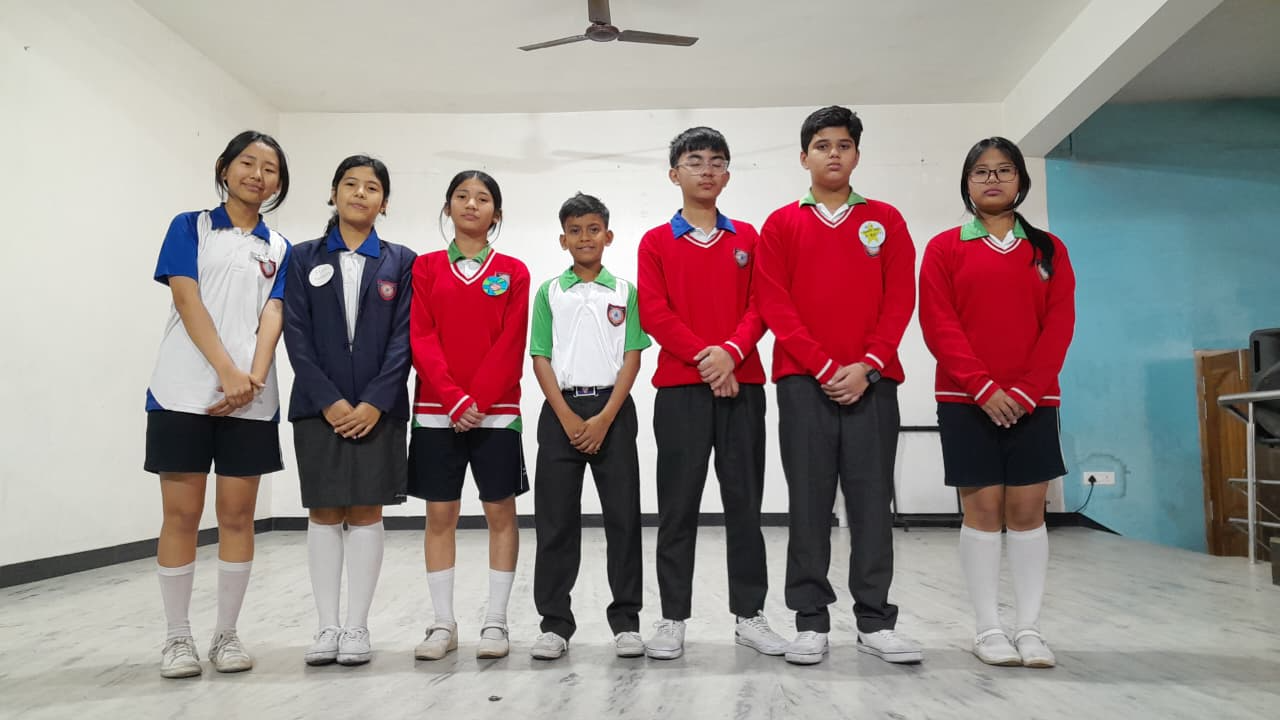
Prose Section : (L-R)Sungtila Jamir, Vivien Sumi, Imleinla, Soumen Paul, Kuxupu G Achumi, Gaurav Dey, Imlisen.

Poem on Anti-Bullying: Imnuksungla Longkumer, Nivilo T & Meyijungla A Longkumer- Class 8C

Bullying is not strength. It is the power that is used the wrong way. One cruel word can echo in someone’s mind all day.

You may forget what you said, you may laugh and move on – . But the person you hurt carries that pain long after you are gone.

Silent supports the bully. Courage supports the meek. if you see the wrong happening, then have the bravery to speak.

Let our school be known not by fear – but respect. Not for judgement -but by acceptance. Not for cruelty – but connection.

We choose respect, and we choose to care. No more bullying anywhere. Be the change. Be the light. Stand for kindness. Stand for what’s right.

Be kind. Thank you.

Poem Section : (L- R) Nivilo T, Imnuksungla Longkumer, Meyijungla A Longkumer.


Article by BENRITHUNG HUMTSOE / Uncategorized Leave a Comment

February 17, 2026

MORNING ASSEMBLY, 16th Feb. 2026 TOPIC : “MY FAVORITE TOPIC IN SCIENCE” CLASS 8B TEACHER I/C : RENTHUNGLO MARTHA

Presenters : Akumtong, Gracy, Imchati & Sentimenla – Class 8B

Akumtong : Photosynthesis.

Science is not a subject, it begins with curiosity. A favorite topic is not always the easiest one. it is the one that makes us ask why, how and what if?

My name is Akumtong and I will be sharing my favorite topic in science

Imagine if you could walk outside, stand in the sun for a few minutes, and suddenly feel like you have eaten a full three course meal. It sounds like a comic book superpower, doesn’t it? Well, in the world of science, this superpower exists in plants, and we call it photosynthesis.

What is Photosynthesis?

Photosynthesis is my favorite topic in science because it is the ultimate ‘Engine of Life.’ At its simplest, it is the process where plants take three basic ingredients—sunlight, water, and carbon dioxide—and transform them into energy.

Why is photosynthesis fascinating?

I find this topic fascinating because it shows how a simple natural process supports the entire living world. It is the foundation of life on Earth. Every food chain begins with plants. The food we eat—rice, fruits, vegetables, and even milk—can be traced back to this one simple process.

Photosynthesis is not just a chapter in a biology textbook; it is the reason we exist. It is a stunning display of nature’s efficiency and beauty. Every time I look at a leaf, I see a tiny, green, energy-producing powerhouse. So, the next time you walk past a tree or look at a leaf, don’t just see a plant. See a silent, hardworking factory that is literally keeping the world alive.

Gracy: Topic- Electricity

If I asked you to imagine a day without your phone, without light, without a refrigerator, or without the internet, what would that feel like? For most of us, it would feel like stepping back into the dark ages. That is why electricity  is not just a school topic; it is the force that powers our lives.

What is Electricity?

Electricity is the flow of electric charge that provides energy to run devices and machines

Why is electricity my favorite topic?

What makes electricity so fascinating to me is that it is both a fundamental part of nature—like lightning in the sky—and a controlled, man-made phenomenon.  It is invisible, yet it has the power to run massive machines, light up entire cities, and connect people across the

 From the early experiments of Benjamin Franklin and Michael Faraday to the modern marvels of electric cars and artificial intelligence, electricity is the backbone of technological progress.

Studying electricity today is crucial because we are in the middle of a global energy transition.  It challenges us to innovate—to find cleaner, more sustainable ways to generate power, such as solar, wind, and hydro-electricity. It teaches us responsibility—that this amazing force must be used wisely to protect our environment.

Imchati: Topic – Micro- Organisms

Right now, on the palm of your hand, there are more living things than there are people on the entire planet. You can’t see them, but they are there. Today, I want to tell you why micro- organisms are my absolute favorite topic in science.”

What are Micro- Organisms?

Micro- organisms are microscopic living organisms. E.g.,. bacteria, Fungi, Virus.

Why is Micro- organism fascinating?

Microbes are often misunderstood. Most people hear ‘bacteria’ or ‘virus’ and think of germs and getting sick. But the reason I love this topic is that microorganisms are actually Earth’s hidden superheroes.

  • They are the world’s best recyclers, breaking down dead matter to keep the soil healthy.
  • They are the world’s best chefs, giving us cheese, yogurt, and bread.
  • And they are the world’s best doctors, as we use them to create life-saving medicines like antibiotics, vaccines.

Sentimenla : Topic – Space Science

When we look up at the night sky, most people see twinkling stars and darkness. But when I look up, I see a vast, unexplored frontier, an endless, exciting mystery waiting to be solved. That is why Space Science is not just a subject, it is a passion.

What is Space Science?

Space science is the multidisciplinary study of outer space, encompassing natural phenomena, celestial bodies (planets, stars, galaxies), and space exploration technologies.

Why do I like Space Science?

Space is a place where the laws of physics are pushed to the limit. I love it because it contains things that sound like science fiction, but are actually real. Scientists send rockets and satellites to explore space. Missions like Chandrayaan and Gaganyaan show how science helped us reach beyond Earth.

We see space science in our daily life through GPS, weather forecasts, satellite communication, and television. Even disaster warnings depend on satellites in space.

Studying space teaches us that the universe is huge but human curiosity is even bigger. One day some of us might become space scientists or astronauts.

Conclusion:

Science does not begin in laboratories.

It begins in the mind of a curious student.

Your favorite topic today may become your career tomorrow—or simply make you a better thinker.

Keep questioning. Keep observing. Keep loving science.

Thank you, and let curiosity guide you.

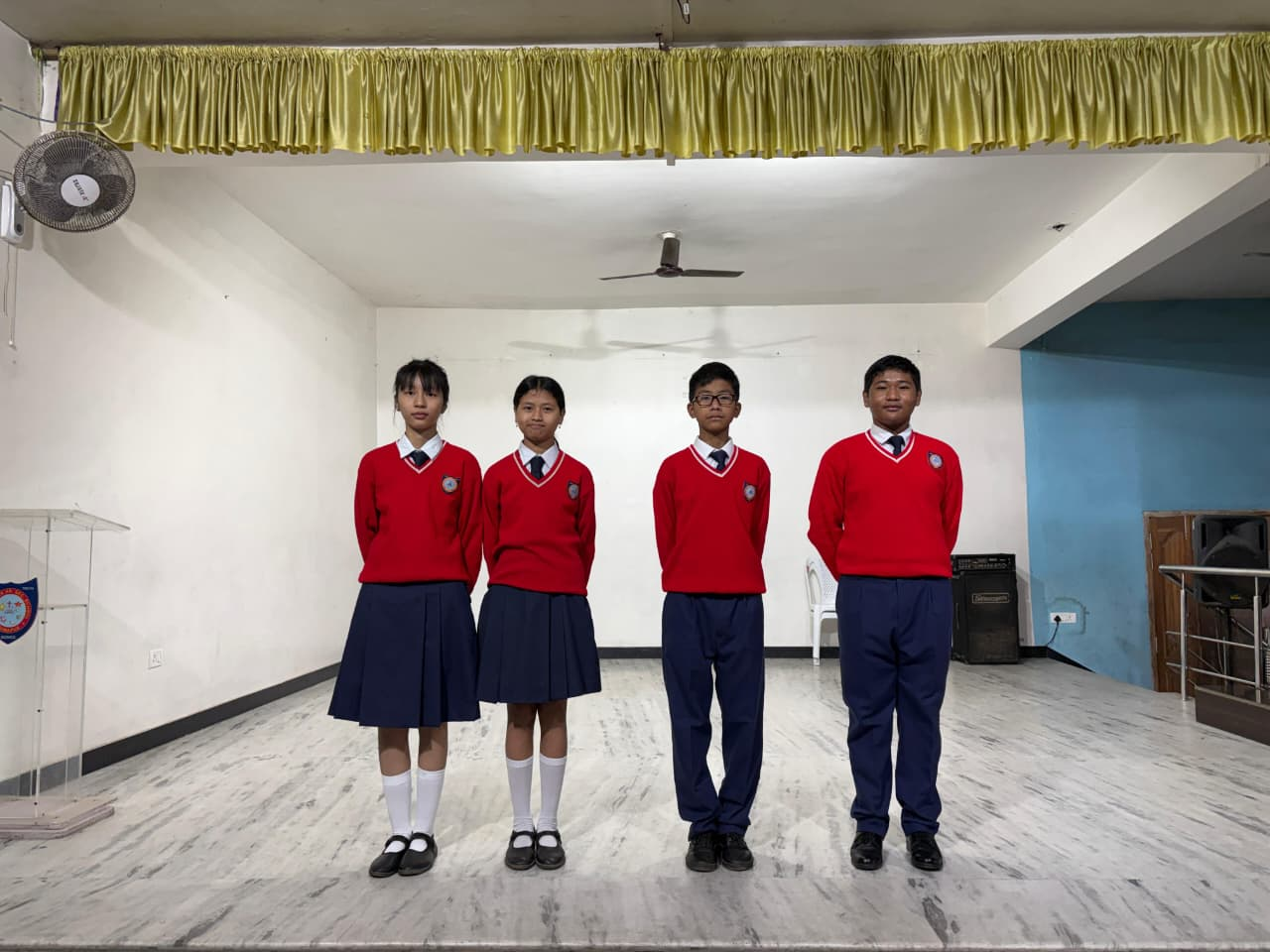
Presenter : L-R (Sentimenla, Gracy Jidung, Imchati Jamir & Akumtong Imsong), Class- 8 (B)
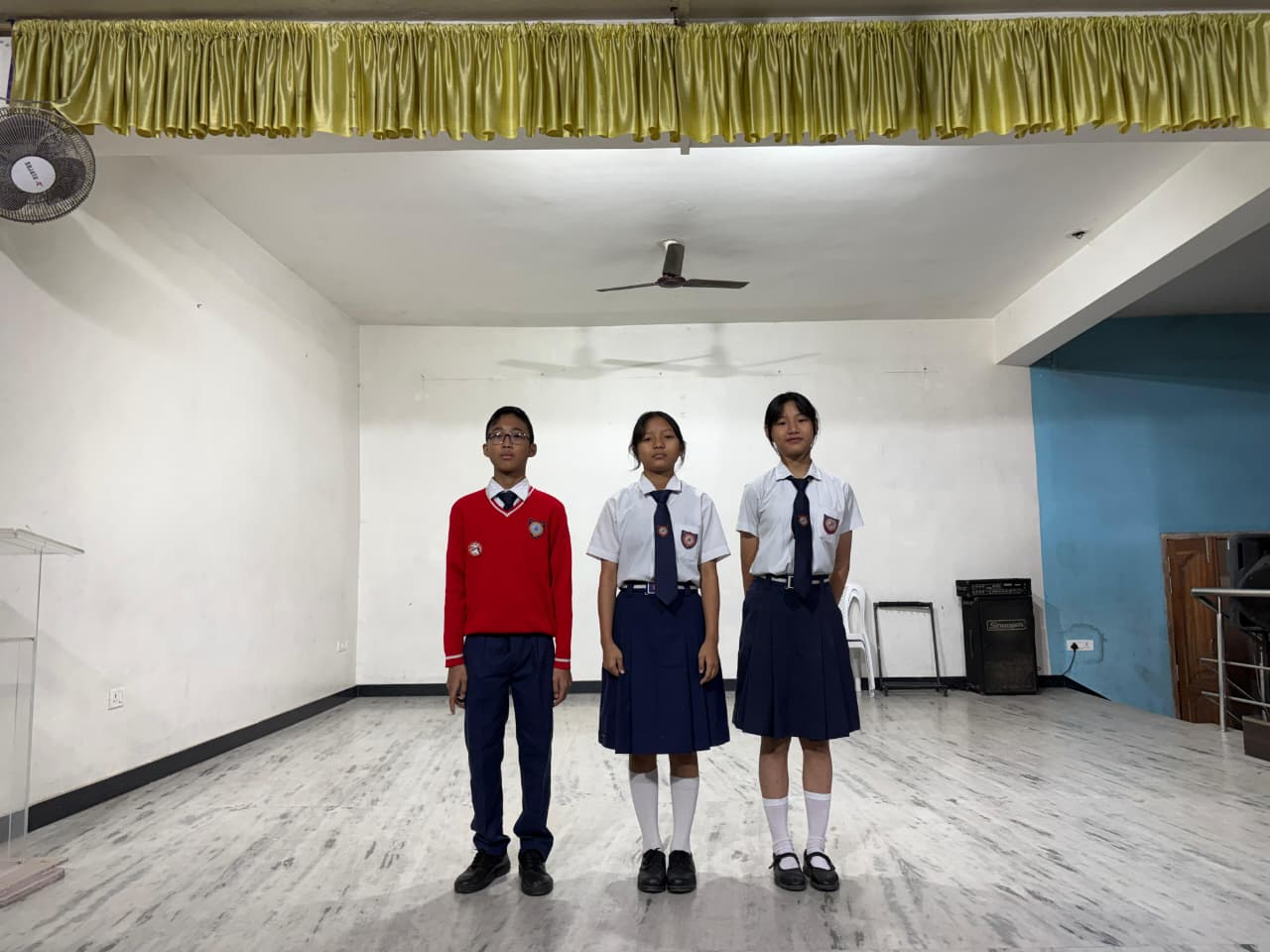
Special Presentation : L-R (Hamshen Wumnok, Ilotoli Jakhalu & Liniu T. Chishi), Class- 8 (B)

Article by BENRITHUNG HUMTSOE / Uncategorized Leave a Comment

January 23, 2026

National Voter’s Day -2026

1. 25th January National Voters Day is celebrated because this is the day when the Election Commission of India was formed. The Election Commission plays a key role in conducting free and fair elections across the country.

The theme for National Voters’ Day 2026 is “My India, My Vote”.

2. What is National Voters Day? 

National Voters Day is a special day in India that reminds us how important voting is in a democracy. It is observed every year to encourage people, especially young citizens, to understand their right to vote and use it responsibly.

Why is National Voters Day Celebrated in India?

National Voters Day is celebrated to remind citizens that voting is both a right and a responsibility. It encourages people to take part in elections and helps us understand how our vote shapes the country’s future.

One key reason why National Voters Day is celebrated is to create awareness among young people. Many students turn 18 every year, and this day motivates them to register as voters and take their first step as responsible citizens.

Understanding Democratic Values

By learning about elections and voting, you will understand democratic values such as freedom of choice and equal voice. These values help you to respect different opinions and participate positively in society.

National Voters Day is observed to remind citizens about the value of voting. Voting gives people the power to choose leaders who work for the welfare of the nation. Even though you as a student are not old enough to vote, but learning about this right is very important.

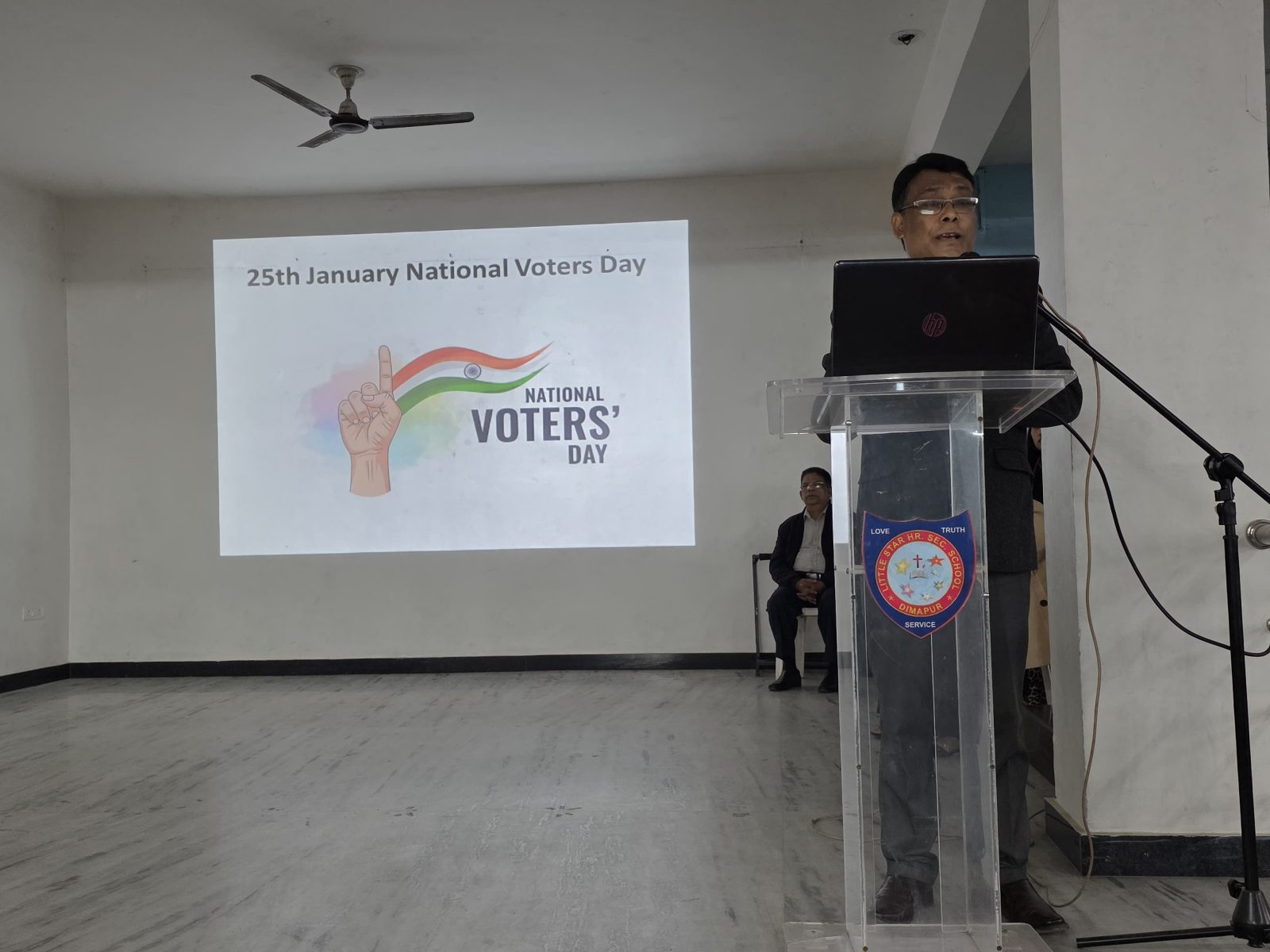
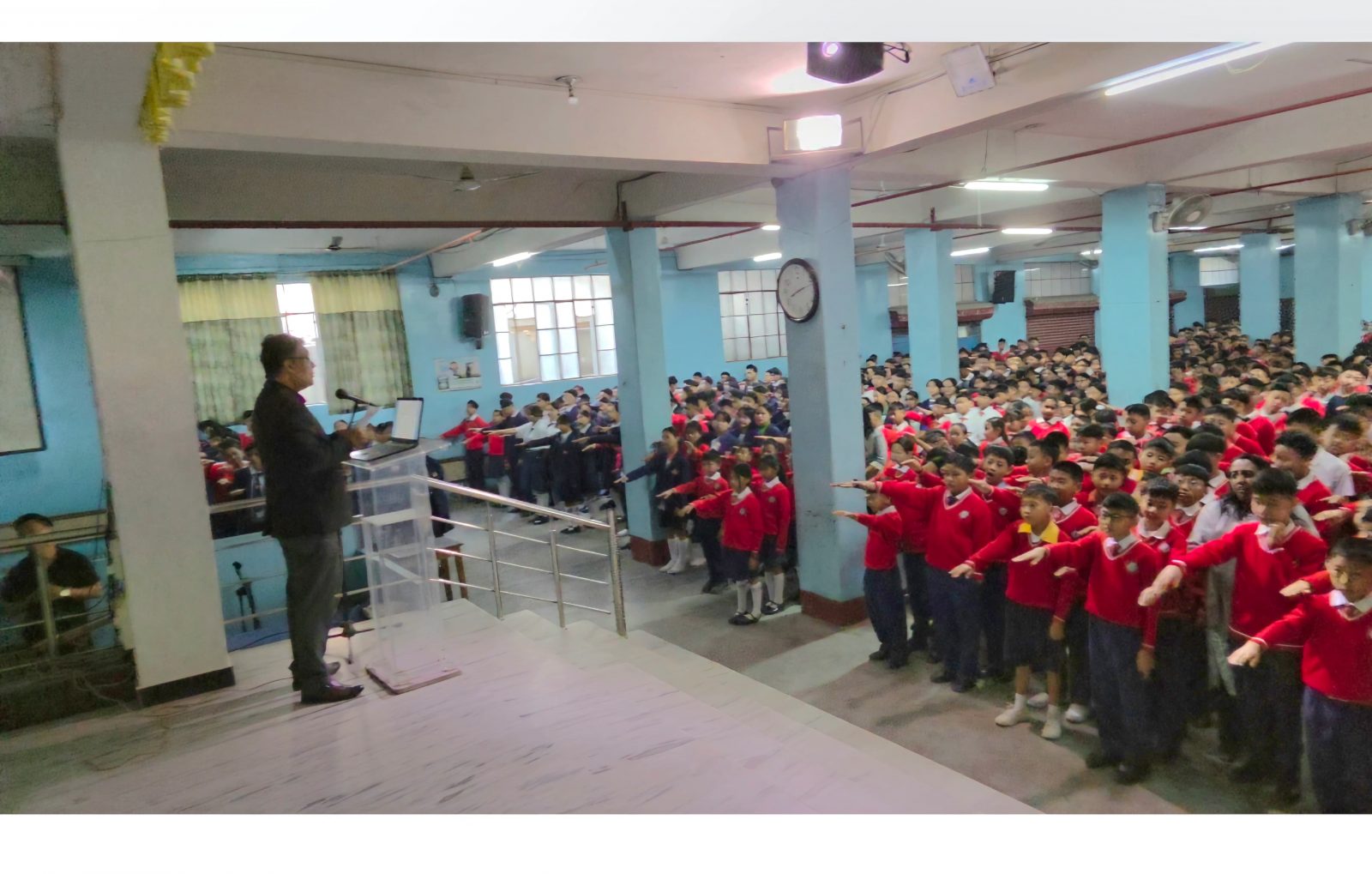
Observing National Voters Day with a talk by Sir Bikash along with pledge taking

Article by BENRITHUNG HUMTSOE / Uncategorized Leave a Comment

July 7, 2025

Topic: “Federalism in India: Unity in Diversity” Assembly Presentation on 23rd June,2025 

India is a land of immense cultural, linguistic, religious, and geographical diversity. Managing such a vast and varied nation requires a political system that accommodates differences while maintaining national unity. Federalism in India plays a key role in achieving this balance, embodying the principle of “unity in diversity.”

Federalism promotes both unity and diversity by dividing power between a central authority and constituent units, like states or regions. This allows for a balance, where the central government handles national issues while regional entities address local needs and preferences, accommodating diversity and fostering a sense of belonging at both levels. 

Here’s a breakdown of how federalism in India promotes unity in diversity:

1. Constitutional Division of Powers:

 * The Indian Constitution meticulously divides legislative, administrative, and financial powers between the Central (Union) government and the State governments. This is primarily done through three lists:

   * Union List: Subjects of national importance like defence, foreign affairs, currency, banking, etc., are exclusively under the purview of the Central government.

   * State List: Subjects of local and regional importance like public order, police, public health, agriculture, etc., are primarily under the jurisdiction of the State governments.

   * Concurrent List: Subjects like education, forest, trade unions, marriage, etc., where both the Centre and states can legislate. In case of a conflict, Central law generally prevails.

 * This clear demarcation of powers allows states to cater to their specific needs and aspirations while ensuring a strong center for national cohesion.

2. Linguistic Reorganization of States:

 * One of the most significant steps towards accommodating diversity was the reorganization of states on linguistic lines after independence. This recognized the cultural and linguistic identities of different regions, allowing people to govern themselves in their own languages and with their unique cultural practices. This helped in preventing secessionist tendencies and fostered a sense of belonging.

3. Asymmetric Federalism:

 * India’s federalism is not uniform. Some states, particularly those with unique historical or cultural circumstances e.g., Jammu & Kashmir earlier, and various North-Eastern states, have been granted special provisions. This asymmetric approach allows for greater autonomy in certain areas, acknowledging and respecting specific regional identities.

4. Role of Institutions:

 * Independent Judiciary: The Supreme Court acts as an interpreter of the Constitution and resolves disputes between the Centre and states, upholding the federal structure.

 * Inter-State Council: This body facilitates coordination and cooperation between states and the Centre on matters of common interest.

 * Finance Commission: It recommends the distribution of tax revenues between the Centre and states, ensuring financial equity and resource sharing.

 * All India Services: Civil servants serving both the Central and State governments promote a unified administrative framework while adapting to local needs.

5. Cultural and Social Accommodation:

 * The Constitution does not impose a single official language or religion, promoting linguistic and religious freedom.

 * It safeguards the rights of minorities, allowing them to preserve their distinct cultures, languages, and scripts.

 * The vibrant democratic process at both national and state levels allows for the expression and negotiation of diverse interests, preventing suppression and fostering inclusion.

6. Respect for Regional Identities

Federalism allows different states to preserve and promote their own languages, cultures, and traditions, ensuring that India’s cultural richness is not lost.

7. Language Policy

The Indian Constitution recognizes 22 official languages, and each state can adopt its own official language, promoting linguistic diversity while maintaining national cohesion.

8. Autonomy and Participation

States have the power to make laws on subjects in the State List, allowing them to cater to the specific needs of their populations.

9.Local Governance

The 73rd and 74th Constitutional Amendments empowered local self-governments, enhancing grassroots participation and ensuring diverse voices are heard.

Federalism is a political framework that recognizes the need for both unity and diversity, creating a system where different groups can coexist and thrive within a larger national framework. 

Federalism in India has strengthened democracy and national unity. It has enabled the peaceful coexistence of multiple identities within a single nation. By giving space to regional aspirations and ensuring cooperation between different levels of government, Indian federalism truly represents the spirit of “unity in diversity.”

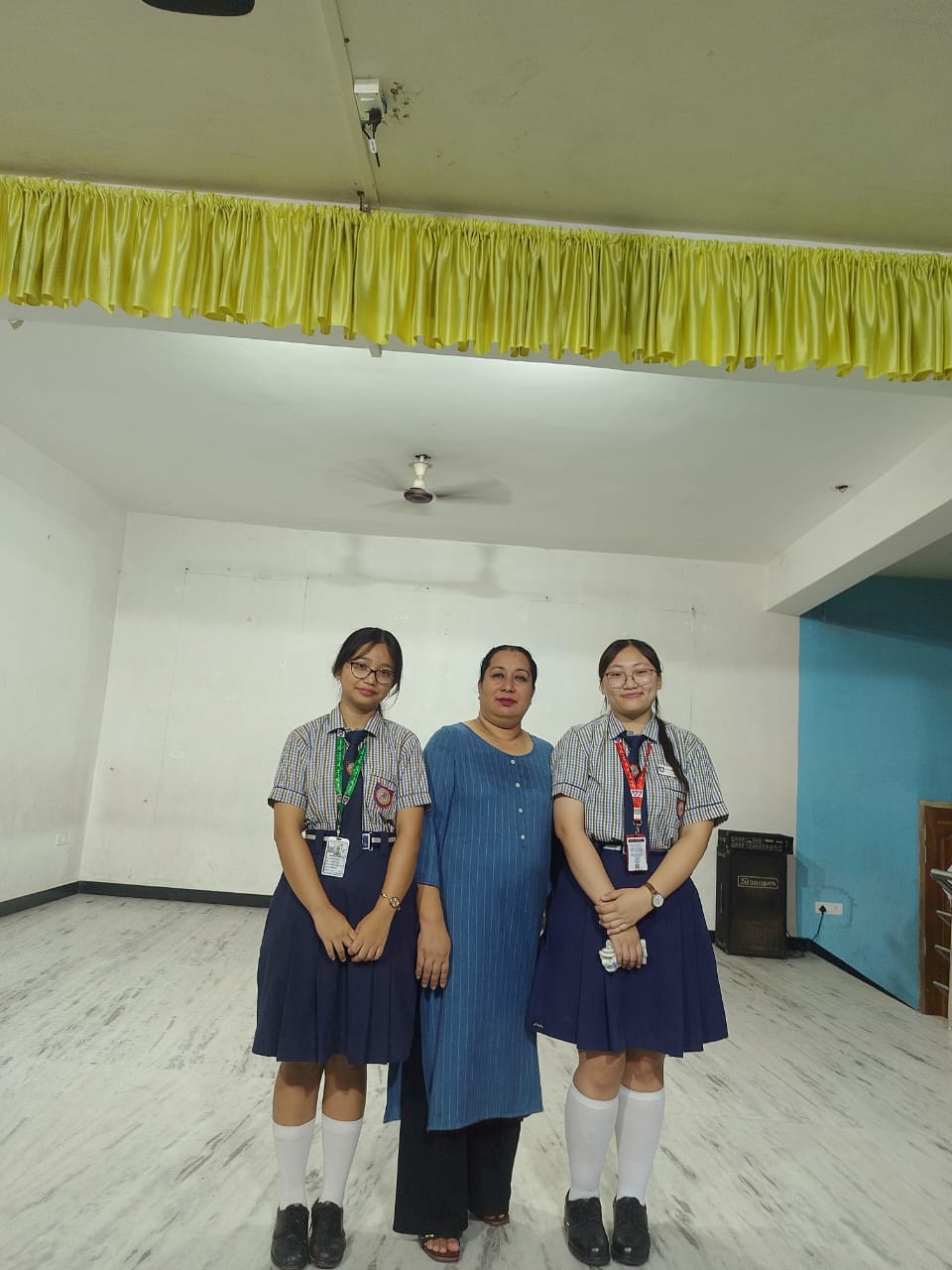
Madam Amenla with Presenters Thujokholu Keyho and Maryangla Longkumer

Article by BENRITHUNG HUMTSOE / Uncategorized Leave a Comment

May 22, 2025

“Maths More Than Just Numbers” Assembly Presentation on 19th May 2025

Mathematics is often seen as a subject filled with numbers, equations, and formulas. Yet, a closer look reveals that math is much more than that—it is a powerful way of thinking, a foundation for essential life skills, and a key force shaping our world in  meaningful and beautiful ways.

Math trains our minds to think logically and analytically. It helps us break down problems, recognize patterns, and make wise decisions—not only in academics but in daily life as well.

Math builds key life skills like critical thinking, time management, and financial literacy. It sharpens our problem-solving abilities, helps us manage time effectively, and equips us to make smart financial decisions in everyday life.

Math instils discipline through regular practice and logical thinking. Each problem solved boosts confidence, building resilience and the belief that challenges—both in math and life—can be overcome with persistence.

Math teaches adaptability by showing there’s often more than one way to solve a problem. It also boosts creative thinking, encouraging us to find new approaches and solutions in all areas of life.

Math is the foundation of many technologies we use daily, from search engines to online banking. It also appears beautifully in nature through patterns like the Fibonacci sequence, seen in sunflowers, pinecones, and seashells—showing math’s presence beyond the classroom.

Geometry helps us understand patterns such as tessellation, where shapes fit together without gaps. Honeybees use this by building efficient hexagonal honeycombs, showing how math guides smart designs in nature and everyday life.

Math plays a crucial role in solving real-world issues, like during the COVID-19 pandemic when mathematical models predicted virus spread and guided safety decisions—demonstrating math’s power to save lives.

Mistakes in math are not failures but valuable lessons leading to growth. A positive mind-set—filled with curiosity and confidence—makes learning math more enjoyable and effective. As Edison said, “Genius is one per cent inspiration and ninety-nine per cent perspiration.”

In conclusion, math is far more than just numbers—it shapes how we think, solve problems, and face challenges. It fuels creativity, builds discipline, and drives the world around us. With practice and the right attitude, math becomes a powerful tool for personal growth and success in any path we choose.

Presenters Imtipokyim and Engpangnaro from Class-10

Link to view the presentation:-https://docs.google.com/presentation/d/19rnVuvHAr23A4ALV_Dfh1pd_vtz1z8InwIQpPEL9R6E/edit?usp=sharing

Article by BENRITHUNG HUMTSOE / Uncategorized Leave a Comment

April 30, 2025

Assembly Presentation on Lessons from Literary Heroes. Dated:-30th April,2025 

Have you ever read a story and thought, “I want to be like that character”?

Books are not just full of fun and adventure—they also teach us important lessons about life.

There’s a famous quote that says, “A good book is like a window into someone’s heart.” That means when we read about heroes in stories, we learn more about being kind, brave, and strong in real life too.

We want to take you on a journey—not through just words or pages, but through the lives of literary heroes who have inspired generations.
 Some are real. Some are fictional. Some lived in castles, others in hiding. But all of them had one thing in common: they made the world a better place, one choice at a time.

Let’s dive into the worlds of Harry Potter, Anne Frank, The Selfish Giant, and The Happy Prince—four unforgettable characters who taught us that being a hero isn’t about wearing a cape.
 It’s about having a heart that refuses to give up on hope, kindness, and courage.

Let’s begin with the boy who lived—Harry Potter, from the famous Harry Potter series by J.K. Rowling.
 He isn’t just a wizard with a wand and a scar. He is a young boy who faced loss, loneliness, and danger—but still chose friendship, bravery, and love.
 Harry teaches us that real courage is not just about battling monsters, but about standing up for what’s right, even when it’s difficult.

Remember how he stood up to Lord Voldemort, but also stood up for his friends, even ? One of the most powerful messages in the series is that our choices define us more than our abilities. Harry chose to be brave, to be loyal, and to be kind—and that made all the difference.

He reminds us: “It is our choices, Harry, that show what we truly are, far more than our abilities.”
 Isn’t that something we all can remember in our own lives?

Now, let’s step out of fiction and into the real world with Anne Frank, the young Jewish girl whose diary has become one of the most important books in history—The Diary of a Young Girl, written by Anne Frank herself.

Imagine being a teenager, hiding in a small attic, unable to go outside, while a war rages on around you. And yet, in those pages, Anne remains hopeful, curious, and full of dreams.

She once wrote, “In spite of everything, I still believe that people are really good at heart.”
 That’s what makes her a hero—not because she fought battles, but because she fought to stay kind in a world full of cruelty.

Anne teaches us the value of resilience, the strength of hope, and the incredible power of a voice—even a young one. Her story tells us that our words matter, and that even in silence, we can make the world listen.

Let’s now enter the world of fairy tales, created by Oscar Wilde, and meet a rather unusual hero—The Selfish Giant, from his short story “The Selfish Giant.”

In the beginning, the giant is exactly what his name suggests—selfish. He builds a wall to keep children out of his beautiful garden. But something strange happens. The garden that once bloomed with flowers and joy becomes trapped in an endless winter. Only when he opens his heart to the children, does spring finally return.

This story shows us that change is always possible, no matter how late we begin. The giant learns that love and generosity bring true happiness—not walls and loneliness.

His transformation reminds us that we all have the ability to grow, to be better, and to make amends.

Finally, we meet another character from Wilde’s magical tales—The Happy Prince, from the story “The Happy Prince”.

Once a royal who lived in luxury, the Happy Prince’s statue now overlooks the city. From his high perch, he sees the suffering of the poor. Though he can no longer move, he gives up all he has—his gold, his jewels—through the help of a kind little swallow, to help those in need.

As the prince gives away everything, piece by piece, he becomes dull and grey—but in that sacrifice, he becomes truly beautiful.
 The swallow, too, shows immense loyalty and compassion, staying with the prince through cold and hardship, until the end.

Together, they teach us that true beauty lies in giving, in love, and in sacrifice.
 It’s a story that reminds us that even if we can’t do everything, we can do something—and that something can change someone’s world.

So what do these heroes teach us?

  • Harry Potter shows us that bravery means doing the right thing, even when it’s hard.
  • Anne Frank shows us that hope can survive, even in the darkest times

The Selfish Giant teaches us that it’s never too late to change.

  • The Happy Prince and the Swallow teach us that true happiness comes from helping others.

None of them wore armor or carried swords. But they had courage, compassion, and the strength to make a difference—and so do we.

Books are not just about magic or fairy tales. They are mirrors of our values and maps to our better selves.

So, the next time you open a book, ask yourself—what will this story teach me? And how can I be a little more like the heroes inside?Thank you, and may we all become the kind of heroes the world truly needs

Presenters Tiati Jamir, Nilovito Achumi, Imsubenla Imchen and Mebi Raksap with Madam Monita

Link to open the Presentation:-https://docs.google.com/presentation/d/17WA_mrJvyjGfFHQOiWJ9hj39sMS1p0fFt7kgCECJZrA/edit?usp=sharing

Article by BENRITHUNG HUMTSOE / Uncategorized Leave a Comment

April 17, 2025

Assembly Presentation 17th April, 2025

Topic: The Cross and the Resurrection

As we gather here today to celebrate the Good Friday and Easter season, we reflect on two powerful symbols of the Christian faith: the Cross and the Resurrection. These symbols hold deep meaning and significance, reminding us of the values of love, sacrifice, and hope.

The Significance of the Cross

The cross is a universal symbol of Christianity, representing the ultimate sacrifice made by Jesus Christ, who gave his life for the sins of humanity. It serves as a reminder of the depth of God’s love for us, demonstrating that love can conquer even death itself. The cross is a powerful symbol that transcends cultures and time, speaking to the human experience of suffering, pain, and redemption.

In the words of Jesus, “Greater love has no one than this, that someone lay down his life for his friends” (John 15:13). This verse highlights the significance of the cross, where Jesus laid down his life for us, demonstrating the greatest act of love.

The Historical Context of the Cross

The cross was a common method of execution in ancient Rome, used to punish slaves, rebels, and those deemed enemies of the state. However, for Christians, the cross represents something more profound – the ultimate sacrifice made by Jesus Christ for the sins of humanity. This sacrifice is seen as a revelation of God’s love for humanity, and serves as a reminder of the depth of that love.

As the apostle Paul wrote, “For I delivered to you as of first importance what I also received: that Christ died for our sins in accordance with the Scriptures” (1 Corinthians 15:3). This verse highlights the significance of the cross, where Jesus died for our sins, to atone for the sins of humanity and resurrection for salvation.

The Resurrection: A Celebration of New Life

The resurrection of Jesus Christ is a celebration of new life and renewal. It signifies that even in the darkest moments, there is always hope for a brighter tomorrow. The resurrection reminds us that we can overcome challenges and emerge stronger, just like Jesus did. This event is a cornerstone of the Christian faith, demonstrating the power of God to transform and redeem.

In the words of the apostle Paul, “But if there is no resurrection of the dead, then not even Christ has been raised. And if Christ has not been raised, then our preaching is in vain and your faith is in vain” (1 Corinthians 15:13-14). This verse highlights the significance of the resurrection, where Jesus was raised from the dead, demonstrating the power of God.

The Historical Context of the Resurrection

The resurrection of Jesus Christ is a pivotal event in the biblical narrative, marking a turning point in human history. According to the New Testament, Jesus was raised from the dead on the third day after his crucifixion, demonstrating his power over death and sin. This event is seen as a fulfillment of Old Testament prophecies, and serves as a reminder of God’s power and love and divinity.

As the apostle Peter wrote, “But God raised him from the dead, freeing him from the agony of death, because it was impossible for death to keep its hold on him” (Acts 2:24). This verse highlights the significance of the resurrection, where Jesus was raised from the dead, demonstrating the power of God.

The Intersection of Faith and Culture

The cross and the resurrection have had a profound impact on art, music, literature, and culture as well.

As the apostle Paul wrote, “For the message of the cross is foolishness to those who are perishing, but to us who are being saved it is the power of God” (1 Corinthians 1:18). This verse highlights the significance of the cross, where the message of sacrifice and redemption has been celebrated and explored in art and literature.

The Personal Significance of the Cross and the Resurrection

For many people, the cross and the resurrection hold personal significance, serving as a reminder of their faith and spiritual journey. These symbols offer a sense of comfort, hope, and guidance, helping individuals navigate life’s challenges and triumphs. The cross and the resurrection can be a source of strength, inspiration, and motivation, as people seek to live out their values and principles.

As the apostle Paul wrote, “For I know whom I have believed, and I am convinced that he is able to guard what I have entrusted to him until that day” (2 Timothy 1:12). This verse highlights the personal significance of the cross and the resurrection, where individuals can find comfort, hope, and guidance in their faith.

The Cross and the Resurrection in Contemporary Society

In contemporary world, the cross and the resurrection continue to hold relevance and significance, serving as a reminder of the values of love, sacrifice, and hope. These symbols offer a message of redemption and renewal, speaking to the human experience of suffering and struggle. The cross and the resurrection remind us of the importance of empathy, compassion, and kindness, as we navigate the complexities of modern life.

As the apostle Paul wrote, “For God so loved the world that he gave his one and only Son, that whoever believes in him shall not perish but have eternal life” (John 3:16). This verse highlights the significance of the cross and the resurrection, where God’s love is demonstrated through the ultimate sacrifice.

The Cross and the Resurrection: A Symbol of Hope and Renewal

As we reflect on the cross and the resurrection, we are reminded of the power of sacrifice, redemption, and renewal. These symbols offer a message of hope, assuring us that even in the darkest moments, there is always a chance for new beginnings and a brighter future.

In the words of the apostle Peter, “Praise be to the God and Father of our Lord Jesus Christ! In his great mercy he has given us new birth into a living hope through the resurrection of Jesus Christ from the dead” (1 Peter 1:3). This verse highlights the significance of the resurrection, where we are given new birth into a living hope.

  • The cross to me(Zelika)  embodies profound sacrifice, unconditional love, hope and a transformative journey to understand the ultimate truth and God’s immense love for us. To me, the cross unveils the truth and reminds me of how much He has done for me.
  • For me (Imsubenla), the resurrection in the Christian faith means so much more than just a historical event . It symbolises hope and a fresh start . It shows that even after the darkest moments, there’s light and new life. Jesus rising from the dead proves that death isn’t the end , and that through faith , we can have eternal life too . It reminds me that God’s love and power are real , and that we can always change grow , and start again . 

In conclusion, the cross and the resurrection are powerful symbols of the Christian faith, reminding us of the values of love, sacrifice, and hope. These symbols offer a message of redemption and renewal, speaking to the human experience of suffering and struggle. As we reflect on the cross and the resurrection, we are reminded of the power of sacrifice, redemption, and renewal, and the importance of empathy, compassion, and kindness in our lives.

May the message of the cross and the resurrection continue to inspire and guide us, as we navigate the complexities of modern life. May we hold onto the hope that is offered to us and remain a steadfast guide on our journey forward. May these pivotal events shape our reflections and inspire us to live out our values and principles in a way that honors God and brings blessings to those around us.

Thank you.

Presenters Mharenthung ,Lansobeni, Imsubenla & Zelika With Miss Temsulemla Hr. Sec English Teacher

Link to view the Presentation https://docs.google.com/presentation/d/15LD2qdhn1gBjkZN6cO8kYl_LzfdEsWP8YRLqJR3Bi98/edit?usp=sharing

Article by BENRITHUNG HUMTSOE / Uncategorized Leave a Comment

March 27, 2025

Morning Assembly Programme 25th March,2025

Topic: Financial Literacy for Students:  The Basics of Saving, Budgeting, and Spending

 By Ishaan & Grace Class-10D

Link to view the Powerpoint Presentation:https://docs.google.com/presentation/d/1K90zkY-SVBJdXsZzE3oECkYjBvdWBBXJ13nbOegF_Ek/edit?usp=sharing

Article by BENRITHUNG HUMTSOE / Uncategorized Leave a Comment

March 27, 2025

Remembering the Holocaust: A Lesson for the Present and the Future

 Presented during the Morning Assembly on 26th March 2025

Student Presenters : Luyin Aier  9A and Hentong T. Konyak 9A

Teacher in charge : Sir Imlitemsu

“For the dead and the living, we must bear witness.” — Elie Wiesel

During the school morning assembly on 26th March 2025,  students and staff reflected on one of the darkest chapters in history—the Holocaust. This powerful presentation served as both a memorial and a reminder of our responsibility to stand against hatred, intolerance, and injustice.

The Holocaust was the state-sponsored persecution and murder of six million Jews by the Nazi regime. Others—including Roma, people with disabilities, political prisoners, and more—were also victims of this genocide. The assembly traced how discrimination gradually escalated from laws and exclusion to segregation, deportation, and mass murder in concentration camps.

“To forget would be not only dangerous but offensive; to forget the dead would be akin to killing them a second time.” — Elie Wiesel

Students were reminded that the Holocaust didn’t happen in a single moment—it unfolded over time, with indifference and silence allowing hatred to grow. The presentation encouraged everyone to learn from the past and take action in the present.

📸 Message of Hope: The assembly ended with a commitment to be upstanders—people who speak up against injustice and promote kindness and inclusion.

Class 9A also presented a group song titled ‘We Are The World.’

✨

 Reflections by the Chairman: 

After the student-led presentation, the Chairman of the school addressed the assembly with a heartfelt reflection. She reminded the students and staff that hatred—when left unchecked—can grow silently in our hearts and lead to the kind of cruelty witnessed during the Holocaust.

She emphasized that we must never nurture hatred in our lives—whether it is toward individuals, communities, or nations. Speaking from a place of faith and compassion, she quoted the teachings of Jesus Christ, who came as a messenger of love, peace, and inclusivity. The Chairman reminded us that Christ welcomed all people, regardless of their background or status, and taught us to “love one another as I have loved you.”

Her reflection called on everyone to embrace those values in daily life, to reject prejudice in all its forms, and to build bridges of understanding and kindness.

Carrying the Message Forward

This assembly was not just a lesson in history—it was a call to action.
Let us choose love over hatred.
Compassion over cruelty.
Unity over division.

By remembering the past, we help protect the future. Together, let’s build a world where every individual is valued, included, and safe.

Article by BENRITHUNG HUMTSOE / Uncategorized Leave a Comment

  • 1
  • 2
  • 3
  • Next Page »

Recent Posts

  • MORNING ASSEMBLY, 20th FEB. 2026 TOPIC: ” MENTAL HEALTH MATTERS- CHOOSING KINDNESS OVER BULLYING,” CLASS 7A TEACHER I/C : MADAM LORENO MURRY
  • MORNING ASSEMBLY, 17th FEB. 2026 TOPIC: ” RETELLING OF A FAVORITE STORY IN THE PROSE SECTION” CONNECT WITH ANTI- BULLYING CLASS 8C TEACHER I/C : MADAM MONITA RAI
  • MORNING ASSEMBLY, 16th Feb. 2026 TOPIC : “MY FAVORITE TOPIC IN SCIENCE” CLASS 8B TEACHER I/C : RENTHUNGLO MARTHA
  • National Voter’s Day -2026
  • Seven Spell — A Class 12 Coding Project at LSHSS

Social Media

  • Instagram : Little Star Hr Sec School
  • Instagram : Star Kids
  • Instagram : Computer Science Dept, Little Star Hr Sec School

Little Star Higher Secondary School

Love Truth Service

Midland, Dimapur
Nagaland

Copyright © 2026 · Education Pro Theme On Genesis Framework · WordPress · Log in